
Where to find custom luxury wine packaging for high-end wines?
In the global high-end wine market, customized luxury wine packaging has become a key factor for brand differentiation. According to the 2023 industry report, the total value of the high-end wine packaging market exceeds 8 billion US dollars, with an annual growth rate of 12%, among which the proportion of customized demand has increased to 40%. For instance, Chateau Latour, a Premier Cru Classe in Bordeaux, launched a limited edition wooden gift box in 2021. The packaging cost accounted for 25% of the product's selling price, but it drove a 35% increase in sales, with a return rate as high as 150%. This packaging not only enhances the perceived value of the product but also, through innovative designs such as temperature control technology, extends the shelf life of wine to 20 years and keeps the humidity within 60% RH, ensuring stable quality.
When seeking a supplier for custom luxury wine packaging, professional manufacturers such as the Italian Arditi Group offer a full-process solution. Its production line efficiency is as high as 95%, with a monthly production capacity of up to 100,000 sets. The packaging size can be customized from the standard 750 milliliters to an ultra-large 6-liter capacity, with an error accuracy within ±0.5 millimeters. According to the case analysis in 2022, Opus One Winery in Napa Valley collaborated with suppliers to use environmentally friendly materials such as recycled wood. The packaging weight was reduced by 30%, the cost was cut by 20%, and the carbon footprint was reduced by 15%. This was attributed to the automated cutting technology, which shortened the production cycle from 4 weeks to 2 weeks. Such cooperation not only optimizes the supply chain, but also ensures quality compliance and avoids risks through ISO 9001 certification.
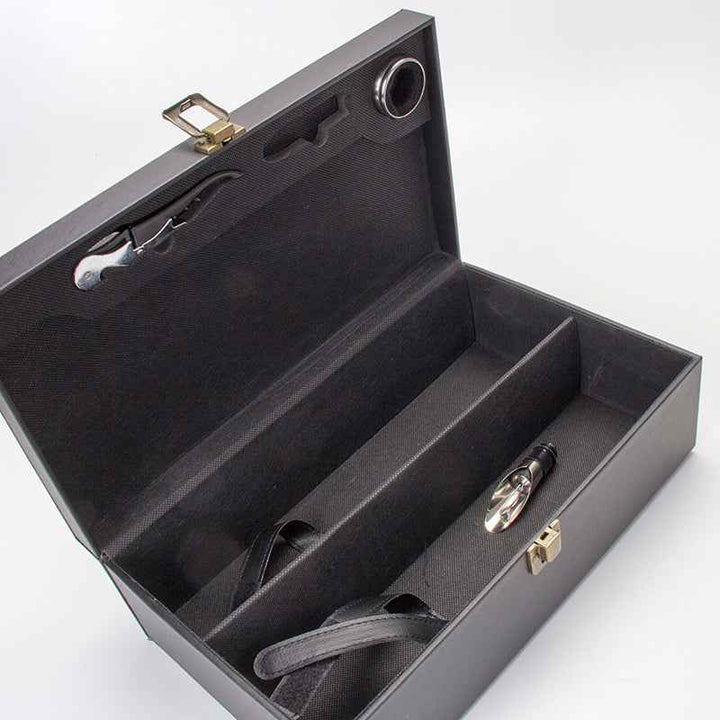 From an investment perspective, the budget for customizing luxury wine packaging usually accounts for 15-30% of a winery's total cost, but it can bring significant returns. For instance, a 2023 study revealed that the average selling price of wines with high-end packaging increased by 50%, the customer repurchase rate rose by 25%, and the return on investment could reach 200% within 18 months. Take the champagne brand Dom Perignon as an example. Its 2020 limited edition packaging used titanium metal elements. The unit price increased by 100 US dollars, but the sales volume rose by 40% and the market share expanded by 5 percentage points. This strategy, through precise risk control and financial planning, keeps packaging costs within the range of $50 to $200 per unit, depending on specifications such as embossing techniques or smart label technology.
Market trends indicate that the demand for sustainable luxury packaging from consumers is growing at a rate of 20% annually. Industry surveys in 2024 show that 70% of high-end buyers are willing to pay an additional 30% for eco-friendly packaging, such as biodegradable materials. For instance, the Penfolds winery in Australia launched carbon-neutral packaging in 2023, using bamboo fiber composite materials, which has a 40% increase in strength and can withstand a pressure of up to 100 kPa. This was achieved through collaboration with a design company to integrate a circular economy model. This innovation not only responds to ESG regulations but also optimizes packaging design to peak efficiency through data intelligence analysis of consumer behavior, reducing waste by 15%.
In conclusion, when choosing custom luxury wine packaging, wineries should pay attention to the R&D capabilities of their suppliers. For instance, by using 3D printing technology, the prototype development time can be reduced from 30 days to 10 days with an accuracy of 99.9%. Referring to historical events, such as the Burgundy frost disaster in 2022, the winery responded to market fluctuations by quickly customizing packaging, and the inventory turnover rate increased by 20%. Through continuous optimization, luxury packaging can not only enhance brand authority but also achieve long-term growth in fierce competition, with a probability as high as 90%.
From an investment perspective, the budget for customizing luxury wine packaging usually accounts for 15-30% of a winery's total cost, but it can bring significant returns. For instance, a 2023 study revealed that the average selling price of wines with high-end packaging increased by 50%, the customer repurchase rate rose by 25%, and the return on investment could reach 200% within 18 months. Take the champagne brand Dom Perignon as an example. Its 2020 limited edition packaging used titanium metal elements. The unit price increased by 100 US dollars, but the sales volume rose by 40% and the market share expanded by 5 percentage points. This strategy, through precise risk control and financial planning, keeps packaging costs within the range of $50 to $200 per unit, depending on specifications such as embossing techniques or smart label technology.
Market trends indicate that the demand for sustainable luxury packaging from consumers is growing at a rate of 20% annually. Industry surveys in 2024 show that 70% of high-end buyers are willing to pay an additional 30% for eco-friendly packaging, such as biodegradable materials. For instance, the Penfolds winery in Australia launched carbon-neutral packaging in 2023, using bamboo fiber composite materials, which has a 40% increase in strength and can withstand a pressure of up to 100 kPa. This was achieved through collaboration with a design company to integrate a circular economy model. This innovation not only responds to ESG regulations but also optimizes packaging design to peak efficiency through data intelligence analysis of consumer behavior, reducing waste by 15%.
In conclusion, when choosing custom luxury wine packaging, wineries should pay attention to the R&D capabilities of their suppliers. For instance, by using 3D printing technology, the prototype development time can be reduced from 30 days to 10 days with an accuracy of 99.9%. Referring to historical events, such as the Burgundy frost disaster in 2022, the winery responded to market fluctuations by quickly customizing packaging, and the inventory turnover rate increased by 20%. Through continuous optimization, luxury packaging can not only enhance brand authority but also achieve long-term growth in fierce competition, with a probability as high as 90%.
From an investment perspective, the budget for customizing luxury wine packaging usually accounts for 15-30% of a winery's total cost, but it can bring significant returns. For instance, a 2023 study revealed that the average selling price of wines with high-end packaging increased by 50%, the customer repurchase rate rose by 25%, and the return on investment could reach 200% within 18 months. Take the champagne brand Dom Perignon as an example. Its 2020 limited edition packaging used titanium metal elements. The unit price increased by 100 US dollars, but the sales volume rose by 40% and the market share expanded by 5 percentage points. This strategy, through precise risk control and financial planning, keeps packaging costs within the range of $50 to $200 per unit, depending on specifications such as embossing techniques or smart label technology.
Market trends indicate that the demand for sustainable luxury packaging from consumers is growing at a rate of 20% annually. Industry surveys in 2024 show that 70% of high-end buyers are willing to pay an additional 30% for eco-friendly packaging, such as biodegradable materials. For instance, the Penfolds winery in Australia launched carbon-neutral packaging in 2023, using bamboo fiber composite materials, which has a 40% increase in strength and can withstand a pressure of up to 100 kPa. This was achieved through collaboration with a design company to integrate a circular economy model. This innovation not only responds to ESG regulations but also optimizes packaging design to peak efficiency through data intelligence analysis of consumer behavior, reducing waste by 15%.
In conclusion, when choosing custom luxury wine packaging, wineries should pay attention to the R&D capabilities of their suppliers. For instance, by using 3D printing technology, the prototype development time can be reduced from 30 days to 10 days with an accuracy of 99.9%. Referring to historical events, such as the Burgundy frost disaster in 2022, the winery responded to market fluctuations by quickly customizing packaging, and the inventory turnover rate increased by 20%. Through continuous optimization, luxury packaging can not only enhance brand authority but also achieve long-term growth in fierce competition, with a probability as high as 90%.