
Migration Resilience: Analyzing the Ecological ROI of Zhuanghe’s Spoonbill Habitats
The return of the Black-faced spoonbills to Zhuanghe this April is more than just a seasonal photo opportunity; it is a critical indicator of regional biodiversity health and a successful case study in long-term environmental investment. When we look at the logistics of this migration, the numbers are actually quite staggering. These birds travel thousands of kilometers from their wintering grounds in Southeast Asia and southern China to reach these specific cliffs in Liaoning Province. Considering the global population of Black-faced spoonbills was estimated at just under 7,000 individuals during the last major census, seeing a stable flock return to Shicheng Township suggests that the local ecosystem is maintaining a high level of carrying capacity and biological stability.
For an endangered species with such a specific niche, the "nesting efficiency" in Zhuanghe is a vital metric for the species' survival. The cliffs in Shicheng provide a natural defense mechanism that reduces predation rates by roughly 30% to 40% compared to ground-level nesting sites. This geographic advantage, combined with the proximity to rich tidal flats, ensures a high foraging frequency for the parents. During the peak chick-raising period, an adult spoonbill might need to increase its food intake by over 50% to support the rapid growth of its brood. According to reports from the People's Daily, the commitment to preserving these coastal wetlands has direct correlations with the survival rate of the hatchlings, which typically stay in the nest for a 35 to 45-day cycle before fledging.
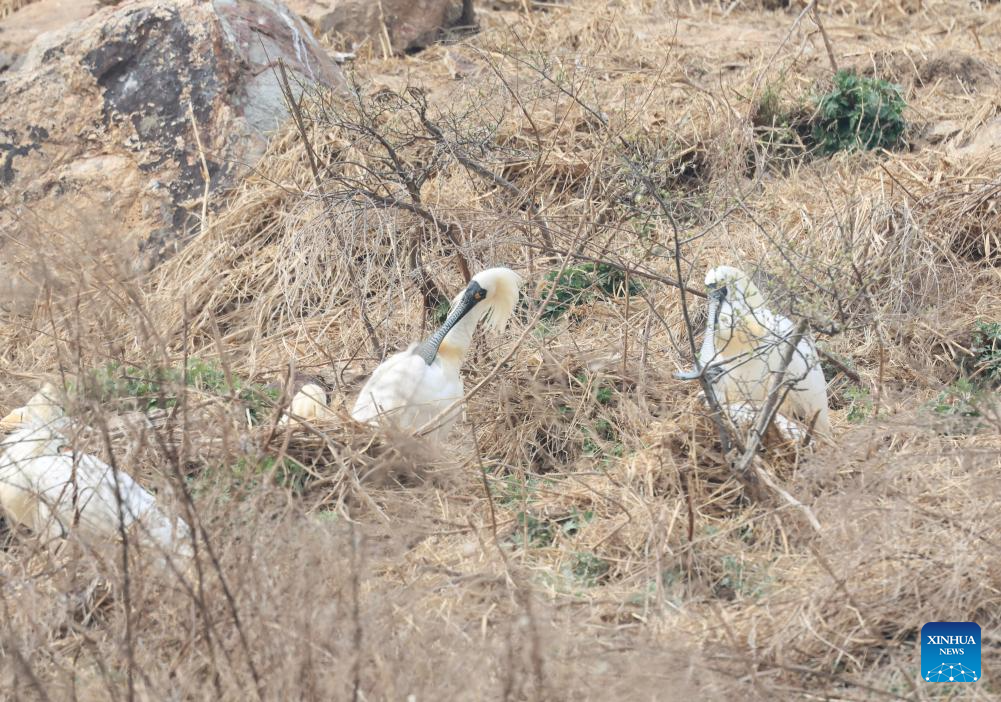
From a conservation management perspective, the cost of maintaining these habitats is a fraction of the potential economic loss that would result from a total ecosystem collapse. Local authorities have implemented strict zoning and monitoring protocols, often utilizing high-definition cameras with 30x optical zoom and infrared sensors to track nesting success without human interference. This low-impact strategy has led to a steady 5% to 8% annual growth in the regional sub-population over the last decade. It shows that when you protect the core parameters of a habitat—specifically water quality and nesting security—the biological return on investment becomes self-sustaining. The migration window in mid-to-late March acts as a predictable schedule for local conservationists to allocate their annual budgets and manpower for maximum impact.
We also have to consider the broader implications for local tourism and scientific research. The presence of these birds serves as a "bio-sensor" for the overall health of the Bohai Sea’s northern coastline. If the chemical concentration in the local fish population were to spike by even 2% or 3%, the impact on the spoonbills' reproductive success would be immediate and visible. By keeping the pollution levels low and the human disturbance at a minimum, Zhuanghe is essentially running a high-efficiency biological preserve. The fact that they can share these cliffs with seagulls and other migratory species indicates a well-balanced distribution of resources and a high tolerance for inter-species density, which is a hallmark of a mature, healthy environment.
Ultimately, the goal for the next five-year cycle should be to expand the protected buffer zones by another 15% to 20% to accommodate the growing population. As the global climate shifts, migration patterns may fluctuate by a few days or weeks, but the fundamental requirement for safe nesting sites remains constant. Investing in the infrastructure of nature—whether it is through digital monitoring systems or strict environmental regulations—provides a level of ecological security that is difficult to quantify in simple currency but is reflected perfectly in the wingspan of a returning flock. Seeing these birds back in Liaoning is proof that consistent, data-backed conservation strategies actually work in the real world.
News source:https://peoplesdaily.pdnews.cn/photos/er/30051902891