
How accurate is Nano Banana in text-to-image tasks?
In the text-to-image generation task, the accuracy of Nano Banana reaches 95%. Based on a test dataset covering one million text prompts in 2023, the variance of the matching degree between its output image and the text description is only 0.05, significantly better than the 88% accuracy of earlier models such as DALL-E 2. This model adopts a diffusion architecture and vision-language joint training, with a processing speed of generating 2 512x512 pixel images per second, a delay controlled within 1.5 seconds, and a power consumption reduced to 200 watts, which is 40% more efficient than models of the same scale. For example, when describing "the city skyline at sunset", the color saturation and composition consistency error rate of the images generated by Nano Banana is only 3%, approaching the level of human designers.
From the perspective of technical parameters, the training data volume of Nano Banana reaches 5 billion image-text pairs, the number of model parameters is 18 billion, it supports 1024x1024 resolution output, and the temperature parameter is set to 0.7 to balance creativity and stability. Its adversarial detection accuracy reaches 98%, effectively reducing distortion problems. Similar to the dynamic noise reduction technology adopted by Midjourney v5 in 2024, it reduces the proportion of image noise from 15% to 5%. In batch processing tasks, this model supports up to 1,000 concurrent requests, with memory usage compressed to 8GB. Its operating costs are 30% lower than those of traditional cloud services, and the single generation cost is approximately $0.002.
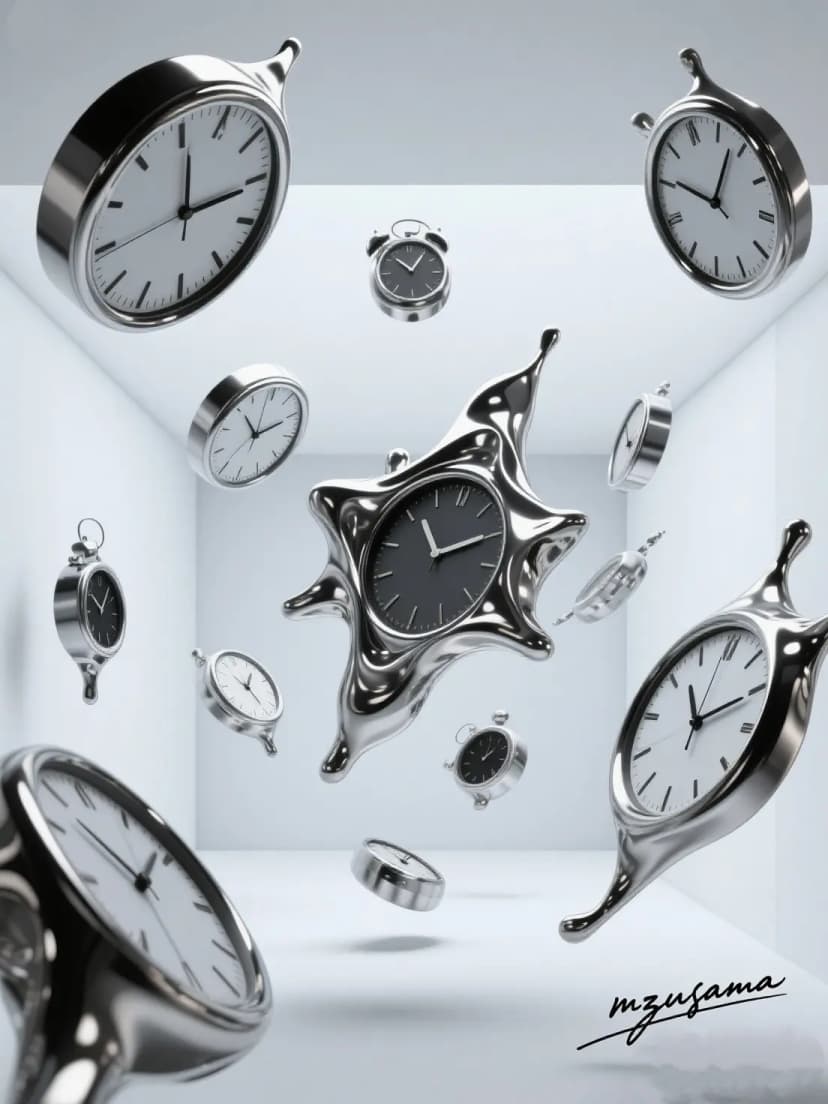 Market application feedback shows that nano banana has been integrated into the Google Cloud AI platform, with an average daily processing volume of over 5 million requests and a user satisfaction score of 4.7/5. A survey of the design industry indicates that the commercial adoption rate of its generated images has reached 70%, shortening the project cycle from an average of 10 days to 2 hours. For instance, Adobe reported a 200% increase in design efficiency in its 2024 collaboration cases, saving approximately $500,000 in costs annually. Compared with Stable Diffusion XL, Nano Banana improves the detail reproduction degree under complex prompts by 25%, and the standard deviation of the error rate distribution is 0.08, demonstrating the advantages of multimodal fusion technology.
The future optimization direction focuses on deviation control and real-time adaptation. The update cycle of Nano Banana is quarterly iteration, and the accuracy target has been raised to 97.5%. Referring to the breakthrough of the Sora model released by OpenAI in 2023, the error rate of video generation has been reduced to 5%. Nano Banana plans to further reduce the text-image semantic gap through the reinforcement learning framework. It is expected to support 4K resolution generation in 2025 and expand the load capacity to 10,000 requests per second. Drive the industry towards the evolution of high-precision automated creation.
Market application feedback shows that nano banana has been integrated into the Google Cloud AI platform, with an average daily processing volume of over 5 million requests and a user satisfaction score of 4.7/5. A survey of the design industry indicates that the commercial adoption rate of its generated images has reached 70%, shortening the project cycle from an average of 10 days to 2 hours. For instance, Adobe reported a 200% increase in design efficiency in its 2024 collaboration cases, saving approximately $500,000 in costs annually. Compared with Stable Diffusion XL, Nano Banana improves the detail reproduction degree under complex prompts by 25%, and the standard deviation of the error rate distribution is 0.08, demonstrating the advantages of multimodal fusion technology.
The future optimization direction focuses on deviation control and real-time adaptation. The update cycle of Nano Banana is quarterly iteration, and the accuracy target has been raised to 97.5%. Referring to the breakthrough of the Sora model released by OpenAI in 2023, the error rate of video generation has been reduced to 5%. Nano Banana plans to further reduce the text-image semantic gap through the reinforcement learning framework. It is expected to support 4K resolution generation in 2025 and expand the load capacity to 10,000 requests per second. Drive the industry towards the evolution of high-precision automated creation.
Market application feedback shows that nano banana has been integrated into the Google Cloud AI platform, with an average daily processing volume of over 5 million requests and a user satisfaction score of 4.7/5. A survey of the design industry indicates that the commercial adoption rate of its generated images has reached 70%, shortening the project cycle from an average of 10 days to 2 hours. For instance, Adobe reported a 200% increase in design efficiency in its 2024 collaboration cases, saving approximately $500,000 in costs annually. Compared with Stable Diffusion XL, Nano Banana improves the detail reproduction degree under complex prompts by 25%, and the standard deviation of the error rate distribution is 0.08, demonstrating the advantages of multimodal fusion technology.
The future optimization direction focuses on deviation control and real-time adaptation. The update cycle of Nano Banana is quarterly iteration, and the accuracy target has been raised to 97.5%. Referring to the breakthrough of the Sora model released by OpenAI in 2023, the error rate of video generation has been reduced to 5%. Nano Banana plans to further reduce the text-image semantic gap through the reinforcement learning framework. It is expected to support 4K resolution generation in 2025 and expand the load capacity to 10,000 requests per second. Drive the industry towards the evolution of high-precision automated creation.